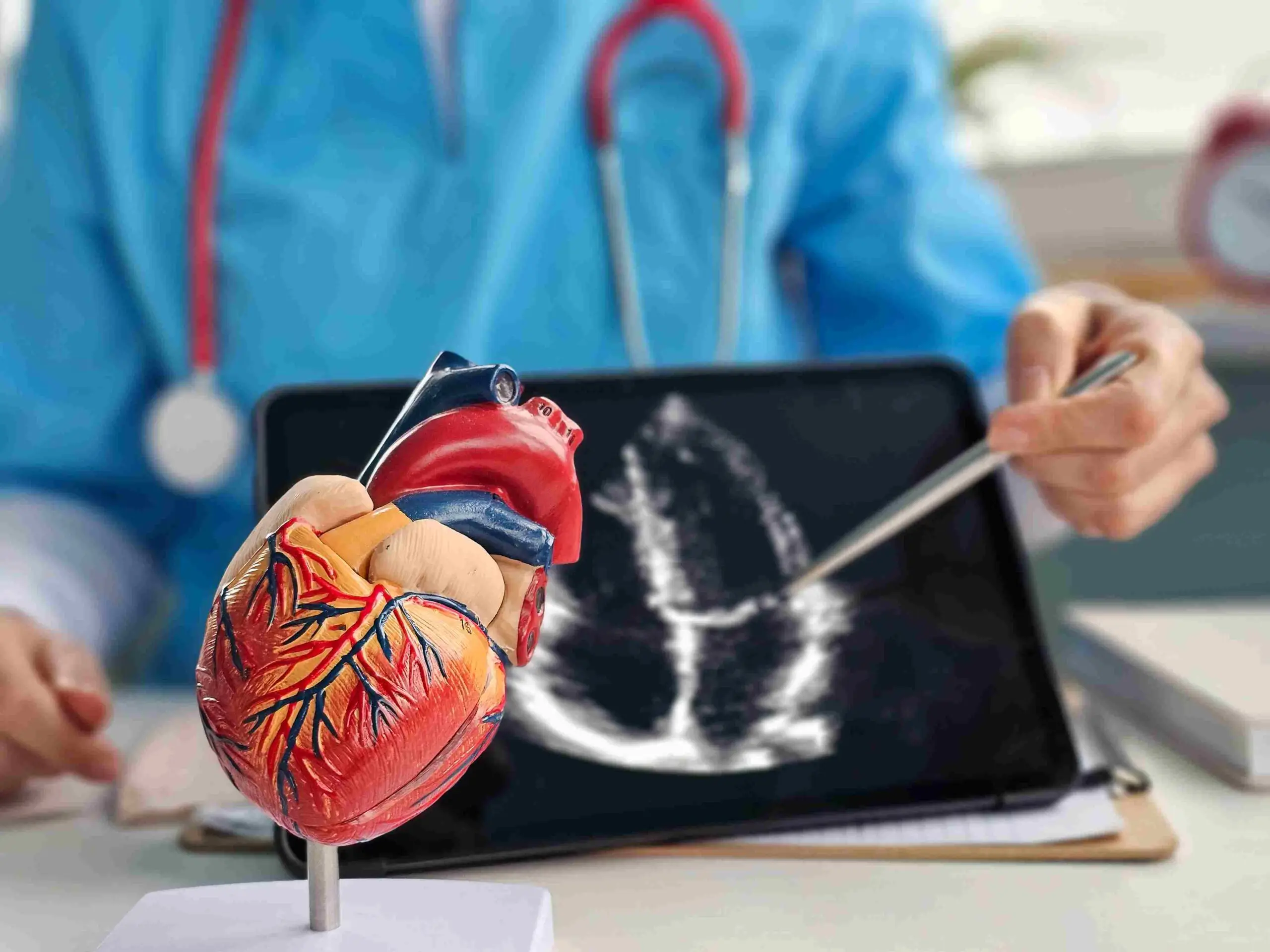
Performed under the expert care of Dr Sveeta Badiani, Consultant Cardiologist in London, this advanced test combines CT imaging with a special contrast dye to produce precise, three-dimensional pictures of your coronary arteries. It is one of the most accurate ways to assess your heart’s blood flow and overall cardiovascular health.
A CT coronary angiogram is a special X-ray scan that provides detailed images of your heart and coronary arteries to check for narrowing or blockages. The procedure involves lying on a table that slides through a CT scanner, having electrodes placed on your chest to monitor your heart, and receiving an injection of a contrast dye to make the arteries visible. The scan is quick and helps doctors with chest pain & ischaemia assessment, diagnosing the cause of chest pain and planning the best treatment.
You may need to stop eating or drinking certain things, like caffeine, a few hours before the procedure.
Medical Information
Inform your doctor about any allergies, kidney problems, asthma, or if you are taking metformin or have a pacemaker.
Breastfeeding
If you are breastfeeding, tell the healthcare professional because the contrast dye can pass into breast milk.
During the Scan
Positioning and Monitoring
You will lie on a table that moves into a doughnut-shaped scanner. Electrodes will be placed on your chest to monitor your heart’s rhythm.
Contrast Dye Injection
A contrast dye will be injected through a small tube (cannula) in your arm. You may feel a warm sensation, a metallic taste, or a brief urge to urinate — these effects are normal and temporary.
Breath-Holding and Heart Rate
You may be asked to hold your breath for a few seconds to prevent blurring of the images. If your heart rate is too fast, you may be given medication to slow it down.
After the Scan
Recovery
You can usually return to your normal activities immediately after the procedure.
Duration
The actual scanning time is very short (a few seconds to a few minutes), but the whole appointment may take around 30 minutes to an hour, including preparation and checks.
Symptoms That You May Need A CT Scan
Your cardiologist may recommend this test if you:
Experience Chest Pain or Discomfort
To check for narrowing in the coronary arteries.
Have Abnormal ECG or Stress Test Results
For further investigation of potential heart disease.
Possess Multiple Risk Factors
Such as high cholesterol, hypertension, diabetes, or smoking.
How Do I Know If I Need a CT Coronary Angiogram?
You might benefit from a CTCA if you have unexplained chest discomfort, risk factors for coronary artery disease, or previous test results suggesting reduced blood flow.
Recurring Chest Tightness or Heaviness
Persistent pressure or discomfort may indicate restricted blood flow in the coronary arteries.
Unexplained Shortness of Breath or Fatigue
Feeling breathless or unusually tired can be an early sign of heart disease.
High Cholesterol or Blood Pressure
These common conditions can silently damage arteries and increase the risk of heart blockages.
Strong Family History of Heart Disease
Early screening is important if heart problems run in your family.
Previous Inconclusive Heart Tests
A CT Coronary Angiogram offers clearer, more detailed imaging to confirm or rule out heart disease.
Dr Badiani manages a wide range of adult cardiology problems including chest pain, breathlessness, palpitations, syncope, heart failure and valve disorders, along with blood pressure and cholesterol management.
What tests might I need at my first appointment?
You may have an ECG and/or echocardiography arranged. If needed, further tests such as stress echocardiography, ambulatory monitoring or blood tests will be organised promptly.
Do I need a referral?
Appointments require booking; please use the clinic booking portal or contact the clinic to discuss referral or self-referral options.
Which languages are available?
Consultations are provided in English and Gujarati; please inform reception if you need language support.