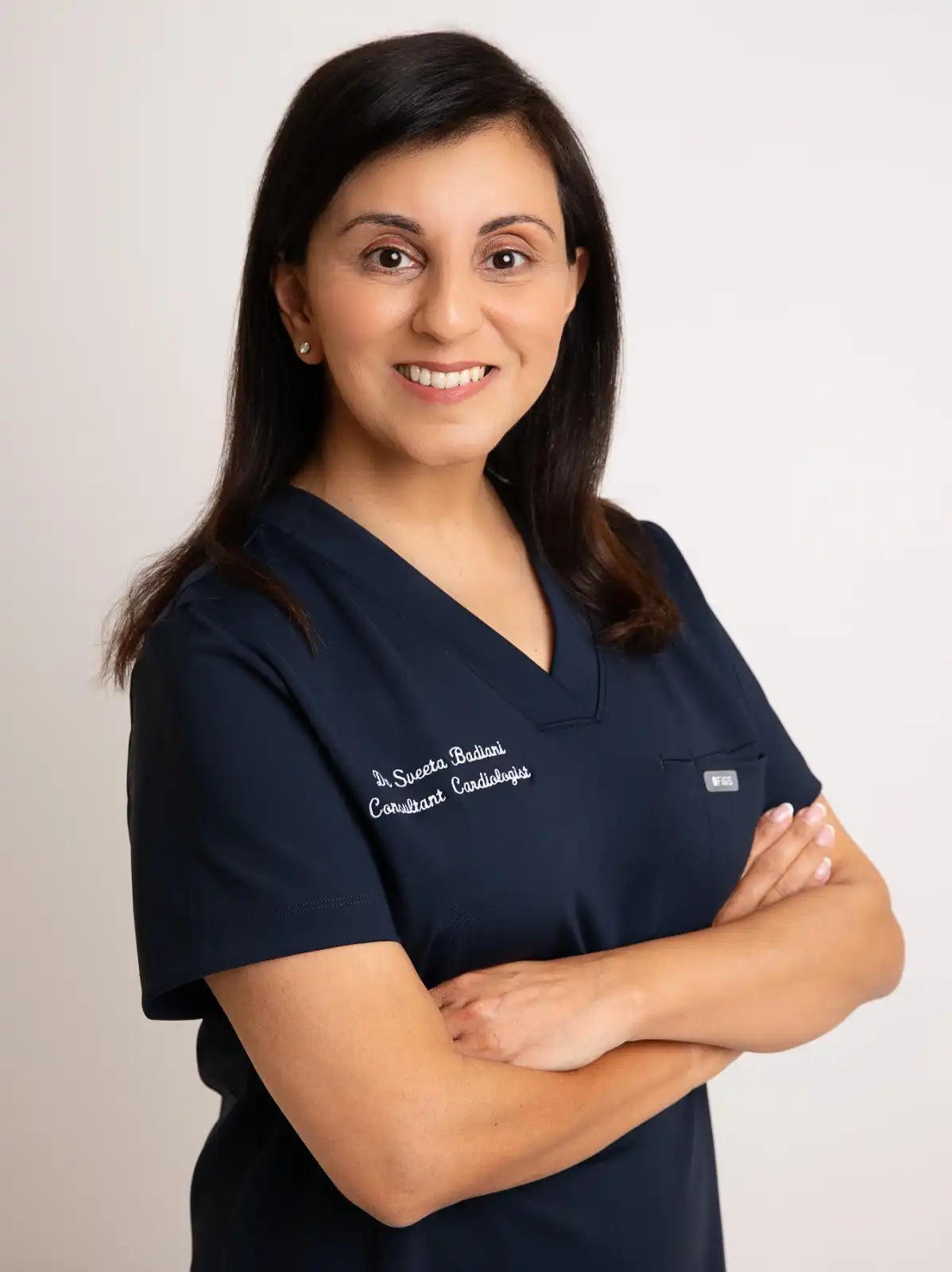
Dr Sveeta Badiani

Service

Electrocardiogram

Performed by Dr Sveeta Badiani, Consultant Cardiologist in London, an ECG is one of the quickest and most effective ways to detect rhythm abnormalities, heart strain, or signs of previous heart damage. It’s a painless, non-invasive test that provides instant insight into your heart’s health and guides further diagnosis or treatment if needed.

Electrocardiogram

An Electrocardiogram (ECG) is a type of cardiac test that measures the heart rhythm and the electrical activity of the heart. It is a non-invasive, painless test that measures the electrical signals in your heart and instantaneously shows its electrical activity.

Naturally occurring electrical signals coordinate the contractions in different parts of your heart. Small, sticky electrodes are placed on your chest, arms, and legs and connected to a 24-hour to 7-day monitor, which records your heart’s electrical activity and plots it as a graph to show how well your heart is working. This quick, painless, and common test helps doctors identify potential heart problems such as issues with blood flow to the heart and irregular heart rhythms. You can typically return to your normal activities while wearing the monitor.

ECG
heart

Common Reasons for an ECG

Your cardiologist may recommend an ECG if you experience:

Palpitations or Irregular Heartbeats

To identify rhythm disturbances such as atrial fibrillation.

To check for signs of reduced blood flow or heart strain.

To determine whether these are caused by heart rhythm issues.

How Do I Know If I Need an ECG?

You may benefit from an ECG if you’ve noticed irregular heartbeats, unexplained tiredness, or chest discomfort.

01

Frequent Palpitations or Skipped Beats

A feeling that your heart is racing, fluttering, or missing beats may signal an underlying rhythm issue.

02

Unexplained Chest Pressure or Tightness

Discomfort in the chest could indicate reduced blood flow or early signs of heart disease.

03

Lightheadedness or Fainting

Sudden dizziness or loss of consciousness may occur when the heart isn’t maintaining steady circulation.

04

Ongoing High Blood Pressure or Diabetes

These conditions increase the risk of heart problems and should be regularly monitored with ECG testing.

05

Preventive Heart Assessment

Even without symptoms, an ECG helps ensure your heart is functioning normally and detects early changes before complications arise.

Related Treatments

star

Cardiology Consultation

Comprehensive heart care for patients of all ages, addressing chest pain, palpitations, breathlessness, and other cardiac concerns.

two elderly dating
star

Cardiology Consultation

Comprehensive heart care for patients of all ages, addressing chest pain, palpitations, breathlessness, and other cardiac concerns.

two elderly dating

Dos and Don’ts for Managing Chest Pain

  • Seek immediate medical attention if chest pain is severe or unexplained.
  • Keep track of frequency, duration, and triggers of your chest pain.
  • Adopt a heart-healthy diet and lifestyle.
  • Take medications as prescribed.
  • Attend regular cardiology check-ups.
  • Don’t ignore sudden or recurring chest pain.
  • Don’t self-medicate without consulting a doctor.
  • Don’t delay emergency care if symptoms suggest a heart attack.
  • Don’t continue smoking or excessive alcohol consumption.
  • Don’t skip prescribed treatments or follow-ups.
Dr Sveeta Badiani

Have More Any Questions?

Clear answers to common questions about appointments, investigations and what to expect at your first visit.

Frequently Asked Questions  About Our Services

What conditions does Dr Badiani treat?

Dr Badiani manages a wide range of adult cardiology problems including chest pain, breathlessness, palpitations, syncope, heart failure and valve disorders, with specialist expertise in cardiac arrhythmia assessment, along with blood pressure and cholesterol management.

You may have an ECG and/or echocardiography arranged. If needed, further tests such as stress echocardiography, ambulatory monitoring or blood tests will be organised promptly.

Appointments require booking; please use the clinic booking portal or contact the clinic to discuss referral or self-referral options.

Consultations are provided in English and Gujarati; please inform reception if you need language support.

icon
Dr Sveeta Badiani